Bookkeeping vs Accounting: What's the Difference?
Understand the key differences between bookkeeping and accounting. Learn how both roles work together to build a strong financial foundation for your business.
Bookkeeping vs. Accounting: What’s the Difference?
In the world of Business & Finance, the terms bookkeeping and accounting are often used as if they mean the same thing. While they are closely related and both deal with financial data, they serve very different roles in the success of your organization. Understanding the distinction is vital for any business owner, entrepreneur, or professional looking to Learn Better and Grow Stronger.
Introduction
At BrainyFlavors, our "Education First" philosophy means we want you to understand the fundamental building blocks of business before you invest in tools or services. Bookkeeping and accounting are the two pillars of financial management. One focuses on the daily "recording" of facts, while the other focuses on the "interpretation" of those facts to drive strategy.
In this guide, we will break down the differences in tasks, goals, and outcomes so you can manage your business more effectively.
Bookkeeping: The Foundation of Data
Bookkeeping is the administrative process of recording daily financial transactions. It is a subcategory of our Business & Finance knowledge area focused on accuracy and consistency. A bookkeeper's primary job is to ensure that every dollar moving in or out of the business is captured in the system.
Core Bookkeeping Tasks Include:
Recording daily sales and expenses.
Processing payroll.
Managing accounts payable (paying bills).
Managing accounts receivable (invoicing customers).
Performing monthly bank reconciliations.
Maintaining the Chart of Accounts.
The goal of bookkeeping is to create a clean, organized General Ledger that reflects the actual state of the business's transactions.
Accounting: The Strategy of Analysis
Accounting takes the data provided by the bookkeeper and turns it into actionable insight. While bookkeeping is about the past (what happened?), accounting is often about the future (what should we do next?).
Core Accounting Tasks Include:
Analyzing financial statements (Profit & Loss, Balance Sheet).
Preparing tax returns and developing tax strategies.
Providing financial advice for business growth.
Auditing financial records.
Forecasting future cash flow and budgeting.
An accountant uses the foundation built by the bookkeeper to help business owners make informed decisions, solve problems, and identify opportunities for Business Improvement.
Comparison: Side-by-Side
Feature Bookkeeping Accounting Primary Goal Record and organize transactions. Analyze and interpret financial data. Frequency Daily or weekly. Monthly, quarterly, or annually. Focus Accuracy and compliance. Strategy and insights. Outcome A balanced General Ledger. Financial reports and tax advice.
Tools to Support Your Financial Success
Whether you are handling the books yourself or working with a professional, having the right physical and strategic tools is essential for maintaining order.
1. Strategic Thinking: "How Successful People Think"
Moving from bookkeeping (execution) to accounting (strategy) requires a shift in mindset. John C. Maxwell's guide helps leaders change how they think to solve problems and plan for long-term growth.
Recommendation: How Successful People Think by John C. Maxwell.
2. Document Organization: JUNDUN Fireproof Organizer
Bookkeepers must manage "Source Documents" like receipts and contracts. Protecting these from damage is a critical part of a professional Productivity workflow.
Recommendation: JUNDUN Fireproof Document Organizer.
Common Mistakes to Avoid
At BrainyFlavors, we aim to help you reduce mistakes. Here are the most common errors businesses make regarding these two roles:
Assuming a bookkeeper can do complex tax planning: Most bookkeepers are not trained in advanced tax law. You need an accountant for that.
Assuming an accountant will fix messy books for free: If your bookkeeping is disorganized, an accountant will charge you extra "clean-up fees" before they can even start their analysis.
Ignoring the data: Both roles are useless if the business owner does not look at the reports to understand where the money is going.
Frequently Asked Questions
Do I need both a bookkeeper and an accountant? Small startups often start with just a bookkeeper (or do it themselves). As the business grows and tax situations become complex, an accountant becomes necessary.
Can software replace a bookkeeper? Tools like QuickBooks or Xero automate many bookkeeping tasks, but you still need someone (you or a professional) to categorize transactions and reconcile accounts correctly.
Which one helps with "Business Improvement"? Accounting is more directly tied to improvement because it involves identifying waste and optimizing cash flow based on the data provided by bookkeeping.
Summary and Next Steps
Bookkeeping and accounting work together as a cycle. Bookkeeping provides the accurate data, and accounting provides the strategic direction. By mastering both, you ensure your business is not just surviving, but Growing Stronger.
Ready to take control of your numbers? Learn more in our Complete Guide to Bookkeeping or explore how Data Strategy can help you make even better decisions for your future.
Written by
Ashraful Haque
Process Improvement Consultant & Operations Specialist with expertise in Lean Six Sigma, financial workflows, and business intelligence systems.
Comments
Leave a comment
Comments are moderated and will appear after approval.
Recommended Products
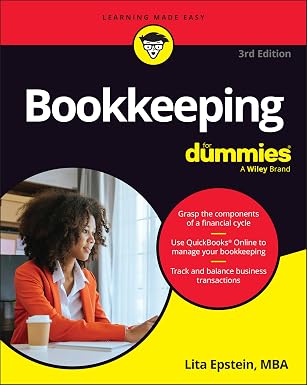
Bookkeeping For Dummies (For Dummies: Learning Made Easy)
A friendly, practical introduction to bookkeeping fundamentals - ledgers, journal entries, and everyday financial record-keeping made approachable for beginners.
Check Price
Volcora 13 Inch Electronic Cash Register Drawer for Point of Sale System with 4 Bill 5 Coin Cash Tray, Removable Coin Compartment, 12-24V, RJ11/RJ12 Key-Lock, Black
A compact cash drawer built for small-business point-of-sale setups, helping keep cash handling organized and transactions more structured.
Check Price
QuickBooks Online Survival Guide for Beginners - 2026 Updated Edition: Step-by-Step Guide to Mastering QuickBooks Online, Fixing Common Errors, ... Accounting Experience for Small Business.
A step-by-step beginner's guide to mastering QuickBooks Online, fixing common errors, and running small-business accounting with confidence.
Check PriceRelated Articles
What Is Record to Report (R2R) in Accounting?
Record to Report, or R2R, is the accounting process that turns financial transactions into accurate, reviewed, and useful financial reports. This guide explains the R2R cycle, core activities, controls, benefits, and practical examples.
Read Article →SafetyStock IQ — Statistical Buffer & Reorder Engine
Downloadable operational utility that ingests CSV / Excel order histories and calculates dynamic safety stock buffers, lead-time variance adjustments, and service level trade-offs.
Read Article →AI-Powered Productivity: Freelancers and ERP Growth
AI-to-ERP integration creates practical opportunities for freelancers who can connect AI-assisted workflows with business systems. This guide explains how to package, deliver, and improve these services through an AI-powered productivity approach.
Read Article →